NBA · BOSTON CELTICS · OPINION & ANALYSIS
Mazzulla Is Changing Jayson Tatum’s Game
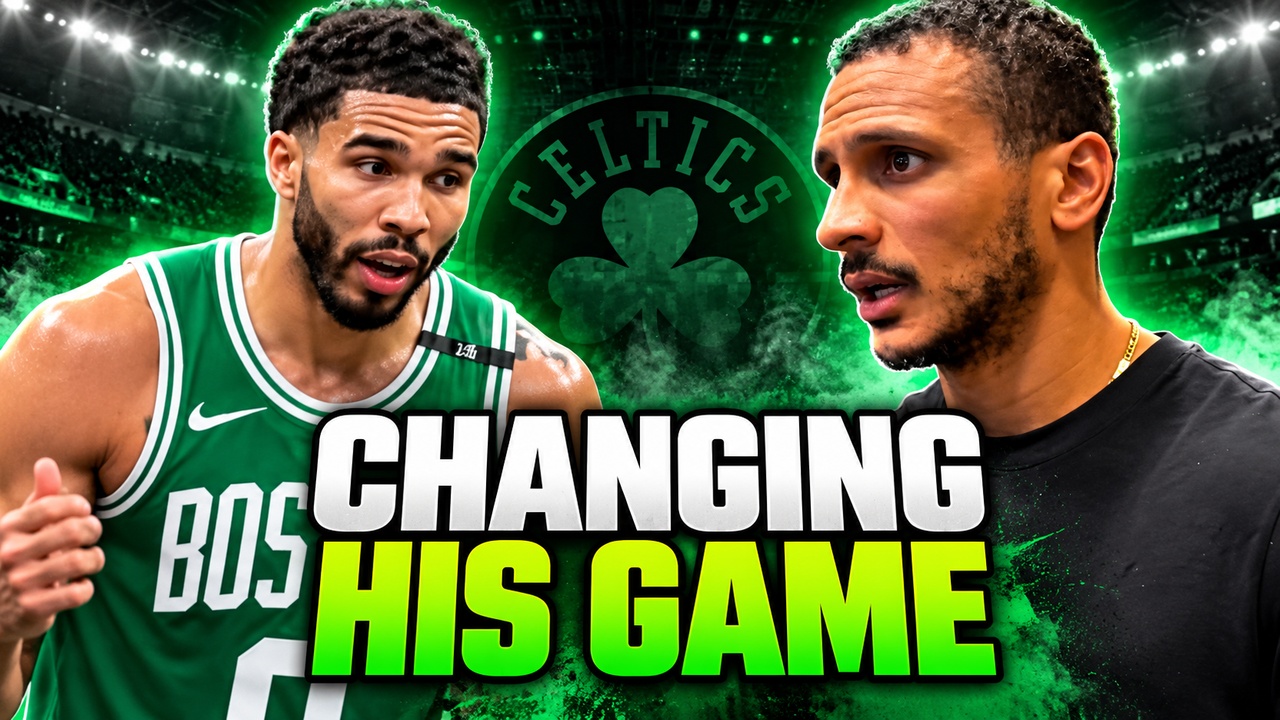
Joe Mazzulla’s Celtics may be finding a different way to use Jayson Tatum: keep him central to the offense while asking him to spend less time controlling the ball. That is the idea behind our headline, and a detailed observation from Zach Magoon puts some numbers behind the discussion.
The original observation, with credit
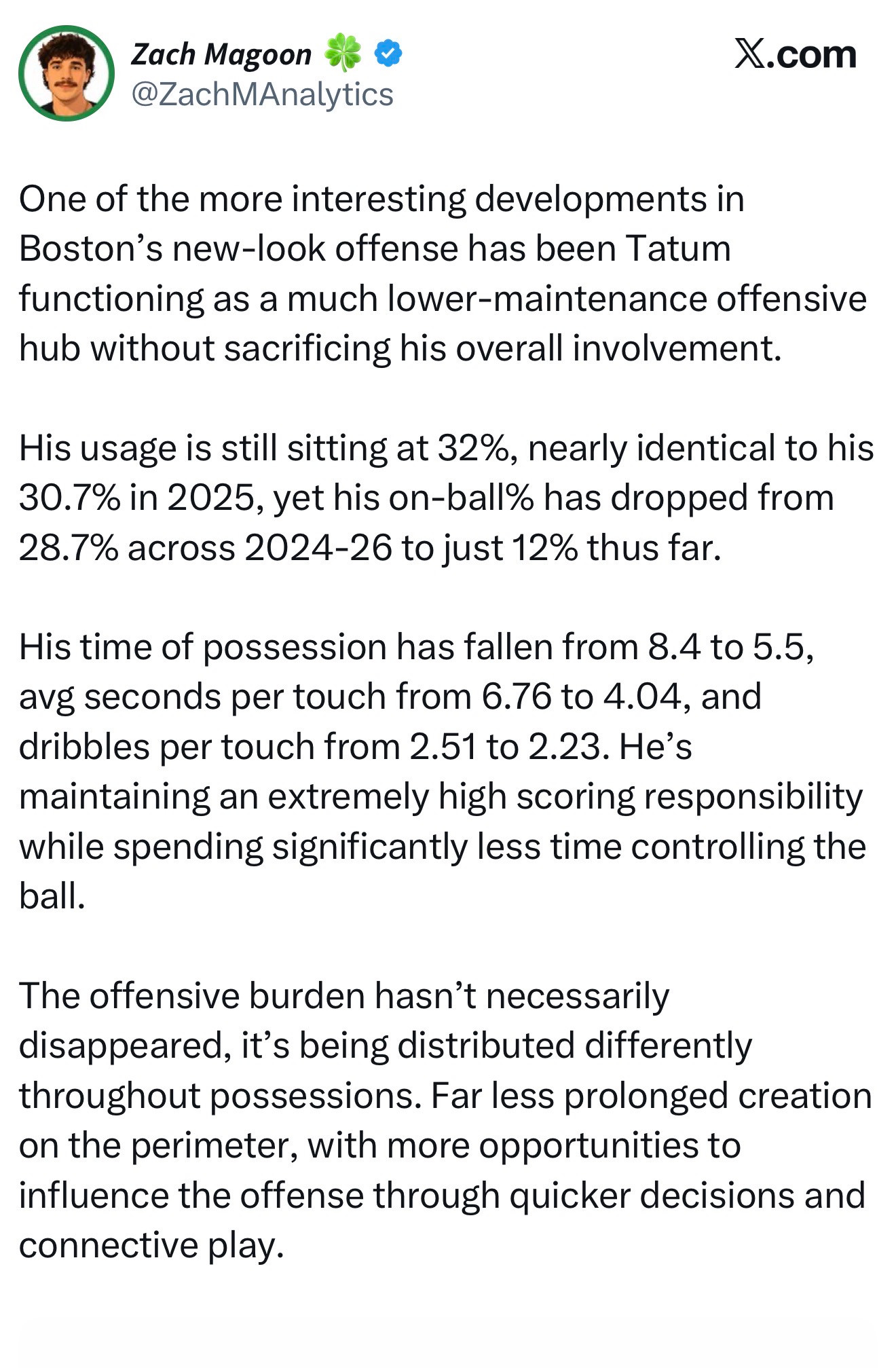
Zach Magoon (@ZachMAnalytics on X) argues that Tatum’s offensive responsibility remains high even as his involvement changes. His actual post, as shown in the supplied screenshot, appears below so readers can see his analysis in full and give him the credit.
What Magoon’s numbers suggest
The figures below are Magoon’s reported comparisons, transcribed from the screenshot. They are not presented as independently reproduced NBA tracking data.
| Measure | Earlier figure in post | Current figure in post |
|---|---|---|
| Usage | 30.7% in “2025” | 32% |
| “On-ball%” | 28.7% across “2024–26” | 12% “thus far” |
| Time of possession | 8.4 | 5.5 |
| Average seconds per touch | 6.76 | 4.04 |
| Dribbles per touch | 2.51 | 2.23 |
The screenshot does not identify the tracking provider, sample size, full comparison windows or the definition of “on-ball%.” The units/window for time of possession are also not specified. Those limits matter when interpreting the change.
Our analysis: a different kind of involvement
The interesting part is that a player can remain a major offensive option without holding the ball through every stage of the possession. Usage measures possession-ending involvement, not time holding the ball; the two measures can move differently.
If this pattern holds, the benefit for Boston could be quicker decisions and more movement before Tatum receives the ball. A catch-and-shoot opportunity, a fast attack against a shifting defense or an immediate pass can still put him at the center of the play. That is the interpretation we are watching, not a claim that the screenshot establishes which actions produced the change.
It also changes the question around Mazzulla’s offense. Rather than judging Tatum’s role only by how often he controls the possession, watch whether the offense gets him useful touches and whether the next decision comes quickly. Less time with the ball is helpful only if the quality of the resulting possessions improves.
A small amount of early game context
- October 20: Detroit beat Boston 121–113; Tatum had 13 points and 11 assists.
- October 23: Boston beat New York 107–103; Tatum had 36 points, nine rebounds and seven assists.
Those box-score lines provide context, not verification of the tracking figures or proof of a coaching effect. Opponents, lineup combinations and the size of the sample can change the picture.
What to watch next
- Does Tatum keep making quicker decisions against different defenses?
- Do his shot quality and playmaking remain strong while his time on the ball falls?
- Does the pattern continue as the sample grows, rather than reflecting only a few games?
That is the case for saying Mazzulla is changing Tatum’s game. The role may be changing without the responsibility disappearing. Magoon deserves credit for the original observation; the next step is seeing whether Boston can sustain it.
Download the video-background PDF, including the original tweet screenshot
Published October 26, 2026. Source checks: October 26, 2:22 p.m. Eastern. This is opinion and analysis, not a direct statement from Mazzulla or a verified causal finding.